
A mineral water bottling plant using full-body or partial-body shrink sleeves on filled PET bottles normally needs a sleeve applicator together with a suitable conveying and shrinking system. A typical line includes bottle spacing, automatic sleeve application, sleeve positioning, conveying, and a steam shrink tunnel. If stable plant steam is not available, a separate steam generator may also be required.
The final bottled water shrink sleeve labeling solution depends on the bottle shape, sleeve coverage, production speed, number of bottle formats, steam conditions, existing line layout, and future expansion plan. These factors should be evaluated together because a fast sleeve applicator alone cannot guarantee stable bottle handling or good shrink quality.
Procus uses the bottle, sleeve, production line, and actual samples to determine the machine configuration, shrink system, change parts, and testing plan for each project.
For filled PET water bottles, a typical automatic system includes a bottle spacing device, sleeve applicator, conveyor, steam shrink tunnel, and a suitable steam source. Bottle-format change parts are added when several bottle sizes need to run on the same machine.
The bottle spacing device creates stable and repeatable gaps before the bottles enter the sleeve applicator. The sleeve applicator feeds the printed film, cuts each sleeve to the preset length, opens it on the mandrel, and applies it to the bottle. The conveyor then carries the bottle through sleeve positioning and shrinking.
A steam shrink tunnel is commonly used for filled water bottles because steam can provide relatively even heat around the bottle. If the factory does not have a stable steam supply, a separate steam generator can be included. Its capacity should be selected according to the tunnel configuration and actual steam demand, not only according to the maximum speed of the sleeve applicator.
The complete configuration may change when the sleeve becomes longer, bottle geometry becomes more difficult, production speed increases, or several bottle formats must run on the same line.
These videos show typical filled-water-bottle sleeve labeling applications. The final machine and shrink tunnel configuration still depends on the actual bottle, sleeve, and production conditions.
This solution is mainly intended for mineral water, spring water, purified water, still water, sparkling water, and other drinking-water products packed in PET bottles.
It can be used for full-body sleeves, partial-body sleeves, or sleeves covering the bottle shoulder and body. The final machine configuration depends on bottle geometry, sleeve size, film material, required production speed, and the way the sleeve labeling system connects to the existing bottling line.
This page mainly covers filled and capped PET water bottles. Empty PET bottles have different bottle-stability, heat-resistance, and moisture risks and should be evaluated separately.
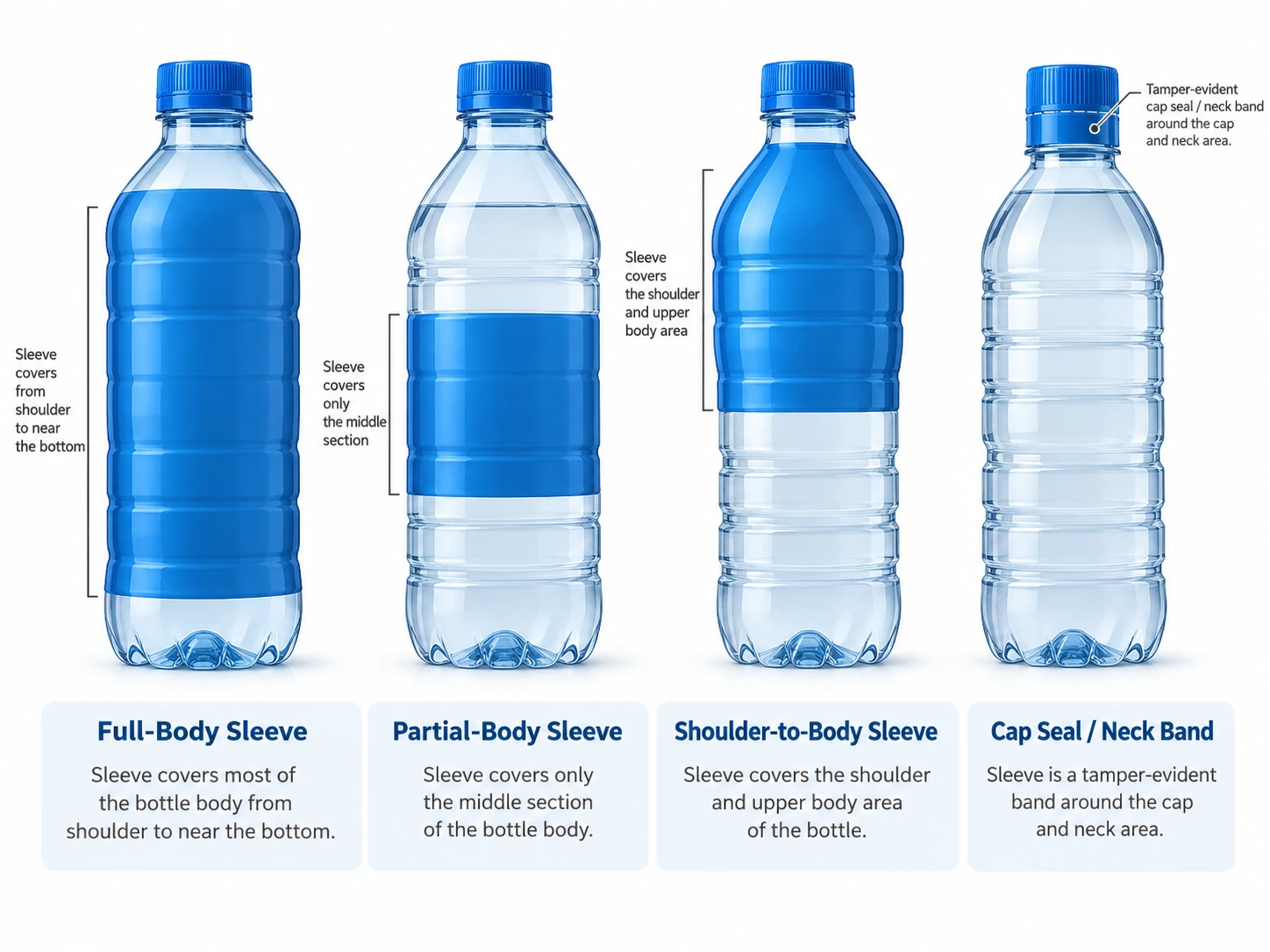
Shrink sleeves can cover different areas of PET water bottles depending on the packaging design and labeling requirements. The illustration below shows four common applications: full-body sleeves, partial-body sleeves, shoulder-to-body sleeves, and cap/neck tamper-evident bands.
The final sleeve size, position, and machine configuration depend on the actual bottle and packaging requirements. Cap and neck bands may require a different applicator configuration from body sleeves.
Filled and capped bottles enter the sleeve applicator at controlled spacing. The machine feeds the printed sleeve film, cuts it to the required length, opens it through the mandrel, and applies it at the preset position.
The bottles then pass through the steam shrink tunnel, where the film shrinks around the bottle shape. Stable bottle spacing and smooth conveying are important for consistent sleeve placement and production.
Filled PET bottles are generally more stable during sleeving and shrinking because the liquid adds weight and supports the bottle body. However, bottle shoulders, recessed areas, and bottom shapes can still affect the final shrink appearance.
Long full-body sleeves may require more controlled shrinking than shorter partial-body sleeves, especially around complex shoulders.
Empty PET bottles have different risks, including bottle instability, heat deformation, and moisture entering the bottle. These applications require separate handling and shrink evaluation.
Learn more about our Empty PET Bottle Shrink Sleeve Machine solution.
Yes. One sleeve labeling machine can often handle several bottle formats, but different bottles may require matching mandrels, bottle screws, guides, and machine settings.
The mandrel must suit the sleeve layflat width, while the bottle screw controls spacing according to the bottle diameter and shape. Guides and conveyor settings may also need adjustment between formats.
Reviewing all planned bottle sizes before manufacturing helps Procus determine the required change parts and plan practical changeovers.
Steam shrink tunnels are commonly used for filled PET water bottles because steam can distribute heat around the bottle and help the sleeve follow its shape.
For simple bottle shapes, shorter sleeves, and moderate speeds, one properly sized steam tunnel may be sufficient. Longer sleeves, difficult shoulder areas, or higher production speeds may require a longer tunnel or more gradual shrinking stages.
Procus evaluates sleeve coverage, film shrink characteristics, bottle geometry, steam supply, and production speed together. Actual sample results help confirm the final tunnel configuration when testing is needed.
The highest-speed machine is not always the most practical choice. The system should match current production needs while considering realistic expansion plans.
If future capacity is uncertain, a machine with a reasonable speed margin may offer better investment efficiency. If expansion is already planned, the applicator, steam tunnel, steam supply, conveyors, and available floor space should be evaluated in advance.
The goal is to avoid both unnecessary initial investment and costly equipment replacement when production increases.
A sleeve labeling system can be connected to an existing bottling line when the conveyor interfaces, available space, production speed, and control signals are compatible.
The upstream equipment must supply bottles steadily. If bottles become insufficient before the sleeve applicator, or accumulate after the shrink tunnel, the system needs suitable stop, start, or speed-control signals to respond.
The project should also define which conveyor sections are supplied by Procus and which are provided by the customer. Conveyor height, direction, connection positions, and control interfaces should be agreed before manufacturing.
If the existing line cannot provide a practical connection, a separate sleeve labeling section may be considered.
Bottle drawings and sleeve specifications allow Procus to prepare a preliminary solution, evaluate machine dimensions, and identify the required change parts.
However, drawings cannot fully confirm sleeve feeding, placement accuracy, bottle stability, or the final shrink appearance.
Testing with real bottles and sleeves helps identify wrinkles, distortion, uneven shrinking, and handling problems. This is especially important for unusual bottle shapes, long full-body sleeves, and higher production speeds.
The final configuration can then be confirmed according to the application requirements and available test results.
Before shipment, Procus checks the agreed equipment configuration and carries out factory testing according to the project scope and available samples.
Machine operation videos, technical documents, and electrical information can be provided as agreed. For overseas projects, installation responsibilities, operator training, spare parts, and remote or on-site support should also be confirmed in advance.
This helps both sides prepare for equipment delivery and production startup.
This solution was developed from a real inquiry from a mineral water bottling plant. The customer initially asked about purchasing a sleeve labeling machine. As discussions progressed, the evaluation expanded to production capacity, future expansion, steam shrinking, line integration, and equipment installation requirements.
The experience highlighted an important purchasing decision: selecting suitable equipment is not only about machine speed or the initial quotation. The complete system scope, operating conditions, and future production plans also affect the investment.
Procus uses this approach when evaluating similar bottled water sleeve labeling projects.
To prepare a suitable proposal, please share bottle photos or drawings, bottle dimensions, sleeve coverage, available sleeve specifications, and the required production speed.
If several bottle sizes will run on the same machine, include all planned formats and any future capacity targets.
For an existing production line, the conveyor layout, installation space, and available utilities are also helpful. Actual bottle and sleeve samples may be required before the final machine and shrink system are confirmed.
Every mineral-water and bottled-water project is different. Send us your bottle photos, sleeve drawing, current packaging method, required speed, production-line information, factory utilities, and installation expectations. Procus will review the application and explain whether you need only a sleeve labeling machine or a complete conveying and shrinking solution.
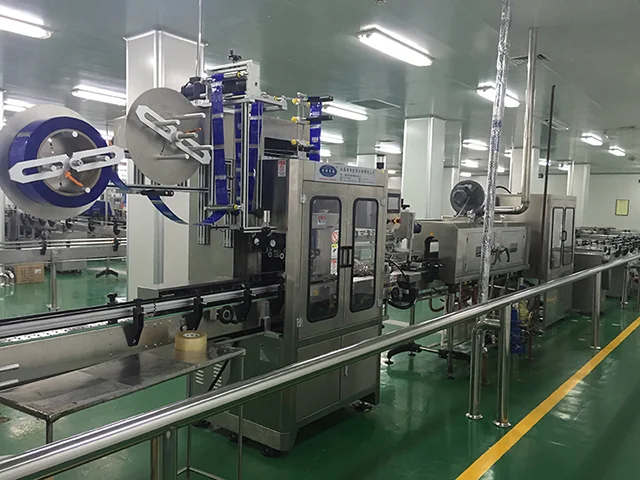
A project-based solution for filled square PET bottles with full-body sleeves, focusing on bottle handling, heat sensitivity, and controlled steam shrinking at higher production speeds.


Procus Machinery is a professional manufacturer who focuses on producing shrink sleeve machines for 25+ years. We passed CE & ISO, Our shrink sleeve machine and after-sales service have been recognized by our customers.
We could provide you high quality products and VIP service.
Company: Shanghai Procus Industrial Co., Ltd.
 : No. 158, Shiwei Road, Nanfeng Highway, Qingcun Town, Fengxian District, Shanghai, China.
: 0086-2161646783
: marketing@procusmachinery.com
: www.procusmachinery.com
We will contact you within 1 hour, please pay attention to our email: “marketing@procusmachinery.com”.
We can make customized sleeve machine for you.
Please leave your message to us,

Automated page speed optimizations for fast site performance